Posts

Showing posts with the label Hope

Pakistan Now: Darkest Before Dawn?
Image
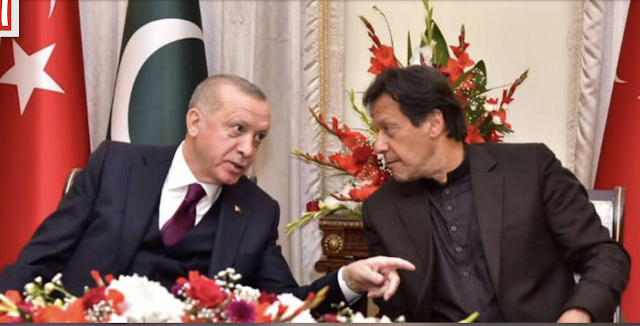
Pakistan is experiencing one of the darkest periods of its history. Political instability is eroding confidence in the nation's future. Declining economic growth and high inflation are hurting the people of all strata of society, particularly the poor whose numbers are rapidly rising. Is there any  hope  left for the country? Is it a case of the "darkest before dawn"? How do investors see it?  Ex PM Imran Khan (R) with President Erdogan Writing in the Time magazine immediately after the recent arrest of former Prime Minister Imran Khan, American investor, author and commentator Zachary Karabell who has invested in Pakistani startups sees rare hope for Pakistan. He sees Pakistan where Turkey was back in 2001-2003, "when a series of elections brought Recep Erdogan to power even as he was repeatedly disqualified by a military that was determined to retain control". Here's an excerpt of his article titled " The Contrarian Case for Pakistan " published ...

Pakistan's Silver Lining in Rising Exports, Remittances

In addition to significant foreign institutional investments (FII) in Karachi shares last year, the reports of surging remittances by overseas Pakistanis and the nation's growing exports are the only two other pieces of good news amidst an avalance of bad news on the economic front in Pakistan in 2010. The State Bank of Pakistan has reported that overseas Pakistanis sent home $5.291 billion during July-Dec, 2010, an increase of $761 million or 17 per cent year over year, according to Pakistan's Dawn newspaper . Remittances of $863 million were sent by overseas Pakistanis last month, up 23.72 per cent or $165 million compared to December, 2009. Exports in the July-December 2010 touched almost $11 billion – $1.8 billion, or 20.6per cent, higher than last year’s exports in the corresponding period. Meanwhile, imports stood at $19.2 billion, marking a growth of 19.6 per cent, or $3.2 billion, in the first half, according to the Express Tribune . Pakistani government has been rely...

Optimisim For South Asian Slums

Image
There is a growing wave of urbanization in the developing world as the cities are drawing people away from subsistence farming to jobs in the industrial and service sectors. This rapid migration of people from rural to urban areas is causing massive increases in urban populations, creating more and larger urban slums, increasing the potential for environmental deterioration, and bringing tremendous pressures on city services already strained beyond limits. Take sanitation, for example, and it is no surprise that three major South Asian cities, Dhaka, Mumbai and New Delhi, show up on Mercer's list of the world's dirtiest cities . United Nations Habitat estimates that roughly 1 billion people -- or 33 percent of the world's urban population lives in slums. By 2030, according to the UN's human settlement program, that number is likely to double. The slum dwellers struggle to survive with little clean water and sometimes no electricity around metropolises like Rio de Janei...

Hope Persists Amidst Gloom in Jinnah's Pakistan

Image
Media reports from Pakistan often portray a picture of doom and gloom, with the IMF bailout of the economy, terrorist training camps, Islamic radicals, horrible governance, and corrupt and inept politicians making the headlines around the world. The adjective of "failed state" is often used to describe Pakistan. Is there more to the story than the big headlines? Is there hope for Pakistanis amidst the doom and gloom? On Quaid-e-Azam M.A. Jinnah 's 132nd birthday today, I think there is. The telecommunication, information technology, higher education, media and the middle class progress started during Musharraf-Aziz years continues to have its impact on the country founded by the Quaid-e-Azam more the 61 years ago. Here are a few things I found posted by a fellow blogger on Tech Lahore blog: 1. Pakistan is the most connected country in South Asia, with the highest teledensity . The Internet penetration in Pakistan is at 10% versus 5% in India, according to ITU . 2. Paki...