Posts

Showing posts with the label Politics

Pakistan Now: Darkest Before Dawn?
Image
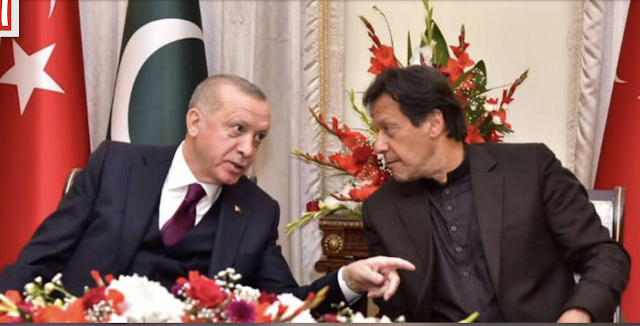
Pakistan is experiencing one of the darkest periods of its history. Political instability is eroding confidence in the nation's future. Declining economic growth and high inflation are hurting the people of all strata of society, particularly the poor whose numbers are rapidly rising. Is there any  hope  left for the country? Is it a case of the "darkest before dawn"? How do investors see it?  Ex PM Imran Khan (R) with President Erdogan Writing in the Time magazine immediately after the recent arrest of former Prime Minister Imran Khan, American investor, author and commentator Zachary Karabell who has invested in Pakistani startups sees rare hope for Pakistan. He sees Pakistan where Turkey was back in 2001-2003, "when a series of elections brought Recep Erdogan to power even as he was repeatedly disqualified by a military that was determined to retain control". Here's an excerpt of his article titled " The Contrarian Case for Pakistan " published ...
Pakistan Is Not Collapsing!

Image
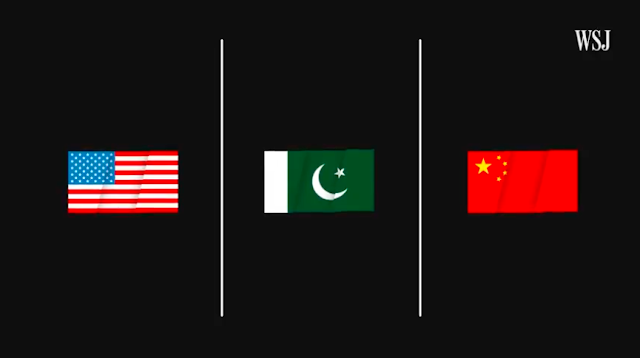
Pakistan is currently facing major economic and political crises. These are partly of its own making but mostly the result of external shocks in terms of commodity prices that have exacerbated the nation's balance of payments.  The Pakistani military's unnecessary meddling in politics and resulting political instability have not helped either. The unprecedented  floods  in the country have further added to the severity of the challenges.   US and China Compete For Influence in Pakistan. Source: Wall Street Journal Pakistan's multidimensional crisis has spurred many in  India  and elsewhere to predict the Pakistani state's imminent collapse. Some  disgruntled Pakistanis  have also jumped on the doomsayers' bandwagon. What is often ignored in such oft-repeated dire predictions is Pakistan's size and its geopolitical importance in the world. Indian analyst Amit Bhandari has summarized it well in a recent  Hindustan Times  Op-ed: "...

Pakistan: The Year 2020 in Review

Image
The COVID19 pandemic has been the biggest story in Pakistan and the rest of the world. It has complicated Pakistan's economic recovery as did the ever-present threat of political instability posed by the opposition parties trying to take advantage of the crisis. Gallup Poll data shows that 65% of Pakistanis are happy despite hardships of the coronavirus pandemic. On the external front, Pakistan faced India's massive global disinformation campaign against it. The year 2020 was a tough year for Pakistan and the world with both health and economic challenges. Pakistan's second COVID wave is now subsiding, the factories are humming, the exports are rising, and the remittances from overseas Pakistanis are at an all time high. Inflation is starting to come down. The nation has shown its resilience yet again by dealing with both challenges successfully.  Here's a quick rundown of the year 2020 in Pakistan: COVID19 Pandemic: Pakistan has very weak health care infrastructure. Th...

Nexus of Crime and Politics Hurting Pakistan Economy

Image
Former Sindh Home Minister Zulfiqar Mirza's dramatic August 28 press conference with a copy of the Holy Quran in his hand has become the center of news media attention in recent days. Following this highly emotion-charged press conference which was carried live by almost all of the mainstream TV channels, Mirza has been hailed as a hero by some of the most popular TV talking heads for railing against MQM's top leadership, and for singling out Pakistan Peoples Party leader and Federal Home Minister Rehman Malik for his harshest accusations. To assess the extent of Mirza's credibility, it is important to understand the following: 1. What triggered the latest of Mirza's outbursts? Was it Malik's decision to send the Rangers in to the Lyari neighborhood of Karachi ? 2. When Mirza used a copy of the Holy Quran in the month of Ramadan to convey his sincerity, did he really tell the whole truth? or did he leave out the ugly truths about the horrific cri...

Perils of Pakistani Politics of Patronage

Pakistan's economy is suffering from stagflation, a very unhealthy combination of very slow growth and high inflation, since 2008. These three years have also seen significant turnover in the nation's top economic management team. Pakistan is now on its third finance minister, Dr. Hafeez Shaikh, in three years. Mr. Shahid Kardar, the third central bank governor since 2008, has just quit amid serious policy differences with the PPP-led government. Kardar is the second central bank governor to leave in just over a year and the third senior policymaker to quit in less than 18 months. During this period, the IMF has also suspended its loans to Pakistan on concerns about lack of progress on budget deficit reductions through revenue enhancements committed by the government in 2008. "Differences of opinion on policy actions and on the implementation of certain directions that I, in my best judgment, did not consider to be judicious have compelled me to resign from office," ...

Assessing Pakistan's Decade 1999-2009

Image
This December 31, 2009, is not just the end of the year; it brings a momentous decade of achievements in Pakistan to a chaotic and bloody end. After a relatively peaceful but economically stagnant decade of the 1990s, the year 1999 brought a bloodless coup led by General Pervez Musharraf , ushering in an era of accelerated economic growth that led to more than doubling of the national GDP, and dramatic expansion in Pakistan's urban middle class. The decade also cast a huge shadow of the US "war on terror" on Pakistan, eventually turning the nation into a frontline state in the increasingly deadly conflict that shows no signs of abating. Along with the blood and gore and chaos on the streets, there are hopeful signs that rule of law and accountability is beginning to prevail in the country with the restoration of representative democracy and independent judiciary, largely in response to an increasingly assertive urban middle class, vibrant mass media and growing civil so...

Pakistan's NRO and Corrupt Democracies of South Asia

Image
Indian and Pakistani democracies have a lot in common. Both systems of governance are a legacy of the British Raj; both have failed to deliver basic necessities , good governance, rule of law and speedy justice to the vast majority of their people; both have been marred by a close nexus between crime and politics; both have many criminals, including violent felons, as members of the legislature and the executive. But the big difference is in the top leadership; the Indian democracy is led by Dr. Manmohan Singh, also known as Mr. Clean; Pakistani democracy has Mr. Asif Ali Zardari, often labeled as Mr. Ten Percent , as its top leader. The culture of rampant political corruption has come in sharp focus for Pakistanis with the recent release of the names of the beneficiaries of the National Reconciliation Ordinance (NRO) , a euphemism for the 2007 US-sponsored amnesty decree by former President Musharraf. There are 34 prominent politicians, including President Asif Ali Zardari and his ...