Does Pakistan's Real GDP Exceed One Trillion US Dollars?
A 2024 joint study of the International Labor Organization and the Small and Medium Enterprise Development Authority (SMEDA) estimated Pakistan's undocumented economy at $457 billion. While other South Asian nations, particularly Bangladesh and India, do include estimated undocumented GDP figures in their official GDP, Pakistan's official GDP figures do not include such estimates. If the Pakistani government decides to include estimates of the informal economy in its official figures, the country's GDP would jump to $1,059 billion in market exchange terms and over $4,000 billion in PPP terms.
 |
| Pakistan's Total GDP, including Undocumented, Estimated at over $1 Trillion |
In 2023 when the ILO-SMEDA study was conducted, Pakistan's official GDP was $340 billion (34% less than the undocumented GDP), bringing the total real GDP for 2023 to $797 billion. Pakistan's official GDP figure for 2025-26 is projected to be $452 billion. Assuming that the undocumented GDP has grown at the same rate as the official GDP, the undocumented GDP today works out to $607 billion, bringing the total GDP (documented and undocumented) to over $1 trillion. In terms of purchasing power parity, the total national economy, including the informal economy, is estimated to be over $4 trillion, which translates to over $16,000 per capita.
Related Links:
Pakistan's Digital Public Infrastructure
Pakistan Projected to Be World's 6th Largest Economy By 2075
Will Gwadar Become Pakistan's Shenzhen?
Pakistan's New Infrastructure Investments and Trade Routes
CAREC: More Landlocked Central Asian Republics Look to Use Pakistani Ports
Solar Power Boom in Pakistan
Pakistan at 75
Growing Presence of Pakistani Women in Science and Technology
Riaz Haq's Youtube Channel


Comments
(Islamabad), 23rd January 2026
https://gallup.com.pk/post/39622
Pakistan today trails India on GDP per capita, a headline indicator often used as shorthand for living standards. On paper, this would suggest that Pakistani households are significantly worse off. However, household asset ownership data tell a more nuanced story. Evidence from Pakistan’s Household Integrated Economic Survey (HIES), benchmarked against comparable Indian household estimates, shows that Pakistani households match or exceed India in ownership of several everyday consumer durables, despite lower average incomes.
India continues to lead in television ownership (around 66%, compared to 50% in Pakistan), although Pakistan’s TV ownership was comparable to India’s as recently as 2019. In contrast, refrigerator ownership is higher in Pakistan (about 56%) than in India (around 50%). The largest gap appears in washing machines, owned by nearly 58% of Pakistani households compared to roughly 20% in India. Motorcycle ownership is similar in both countries (India ~55%, Pakistan ~53%), while car ownership remains low, with India holding only a small lead (~8% vs ~6%).
These patterns suggest that, despite lower GDP per capita, Pakistani households historically placed greater emphasis on labour-saving domestic appliances, while Indian households invested more in entertainment assets and, later, automation.
The broader lesson is that GDP per capita does not translate mechanically into household living standards. Consumption choices, relative prices, infrastructure, gender roles, and historical preferences all shape how income is converted into daily welfare. Living standards, in short, are shaped by more than income alone.
This analysis was conducted and released by Gallup & Gilani Pakistan, the Pakistani affiliate of Gallup International. It draws on long-run household asset data from the Household Integrated Economic Survey (HIES) compiled by the Pakistan Bureau of Statistics, covering the period 2000–2025, alongside comparable Indian household estimates. (Gallup Pakistan Digital Analytics Dashboard)
https://www.arabnews.com/node/2647930/pakistan
Aurangzeb says budget seeks to build on economic stabilization achieved over past two years
Minister cites manufacturing growth, remittances and IT exports as signs of economic recovery
ISLAMABAD: Pakistan’s proposed budget for fiscal year 2026-27 is designed to accelerate export-led growth and build on economic stabilization achieved over the past two years, Finance Minister Muhammad Aurangzeb said on Saturday as he wrapped up a parliamentary debate on the government’s fiscal plan.
The Rs18.9 trillion ($67 billion) budget, unveiled on June 10, seeks to maintain fiscal discipline while supporting growth in an economy recovering from a balance-of-payments crisis that pushed Pakistan to the brink of sovereign default in 2023.
The proposals sparked days of debate in parliament, with lawmakers raising concerns about taxation, revenue collection measures, relief for households and the pace of economic recovery.
“The fundamental goal of our government and this budget is export-led growth, which should be sustainable and inclusive, which should increase productivity and create jobs,” Aurangzeb told the National Assembly in his speech on the budget debate.
He said the government believed the economy had moved beyond a period of stabilization and was now positioned for stronger growth, pointing to improvements in key economic indicators over the past year.
“Today our industry is doing well,” he said, adding that large-scale manufacturing had recorded growth of around 6.5 percent, the highest in four years.
Aurangzeb said Pakistan’s external account had also remained stable, noting that the country had posted a current account surplus during the first 11 months of the current fiscal year, while remittances from overseas Pakistanis were expected to reach $41 billion by year-end.
He also highlighted growth in the technology sector, saying information technology exports had increased by 20 percent during the year and were expected to exceed $4.5 billion, while Pakistani freelancers had generated record earnings of $1.6 billion.
The finance minister said the government had sought to shift the focus of fiscal policy toward expanding the tax base rather than imposing additional burdens on existing taxpayers.
“We have changed this trend through this budget and have focused on broadening and deepening instead of burdening,” he said, adding that the government had sought to provide relief to salaried workers, exporters, industries and small businesses while improving tax compliance and enforcement.
Aurangzeb also highlighted ongoing reforms at the Federal Board of Revenue, saying the government was introducing a new operating model aimed at increasing digitization, reducing discretionary powers and improving transparency in tax administration.
The budget debate took place amid Pakistan’s efforts to sustain economic recovery under reforms linked to a $7 billion International Monetary Fund (IMF) program.
The government has projected economic growth of 4.2 percent in the next fiscal year and says lower inflation, a stronger external position and rising exports provide a foundation for faster expansion.
The Finance Bill is expected to be approved by parliament before the start of the new fiscal year on July 1.
Goenka’s remarks reveal a real shift in Indian business thinking. The fear is no longer simply that China may dominate India. It is that India may fall behind while other Global South countries work with China and enter the next round of industrial growth. Refusing cooperation will not create autonomy. For many developing countries, it may mean being left behind altogether.
But his proposed solution reveals an old Indian fantasy. He argues that India should skip traditional stages of industrial development and move directly into digitally integrated, low-touch manufacturing.
This mistakes China’s destination for a shortcut. China automated only after it had learned how to organize production on a vast scale. India cannot automate a manufacturing system it has not yet built.
The hardest part of industrialization is making factories produce reliably, year after year. That capacity comes from long practice. It cannot be imported together with advanced equipment.
Low-touch manufacturing may create a few impressive factories. It will not build a broad industrial economy or provide work for India’s vast labour force.
That is the contradiction in Goenka’s argument. He understands that India cannot afford to stay away from China, yet still hopes to purchase the outcome of industrialization while skipping the process that produces it.
#India #China #MakeInIndia #Manufacturing #GlobalSouth #SupplyChains
If youre not at the table, youre on the menu: FICCI presidents China message businesstoday.in/india/story/if… via @business_today
https://x.com/southernm46171/status/2068906504179319223?s=43
————-
FICCI President visited China's corporate giants, including BYD. His 3 biggest takeaways - BusinessToday
https://www.businesstoday.in/industry/story/ficci-president-visited-chinas-corporate-giants-including-byd-his-3-biggest-takeaways-538519-2026-06-22
FICCI President Anant Goenka has shared his observations from a recent CEO delegation visit to China, describing the country's business environment as an intensely competitive ecosystem shaped by aggressive market-share battles, heavy investments in research and development, and extensive state support.
In a post on social media on Monday, Goenka said he led a FICCI CEO delegation to China and visited major companies including BYD, Geely, Midea and Mindray.
'A no-frills fighting ring'
Goenka said China operates as an exceptionally competitive market where companies are willing to sacrifice profitability in pursuit of scale and market dominance.
"China is like a no-frills fighting ring. Extremely competitive. Businesses operate at margins (2-3%), and global boards would never approve. Only market share matters, and there is no concept of ROI. The few who survive are the toughest and the best," he wrote.
According to Goenka, the intensity of competition creates an environment where only the strongest companies emerge as long-term winners.
Long-term bets on R&D and automation
The FICCI chief said one of the most striking features of the companies he visited was their commitment to long-term investment in innovation and manufacturing efficiency.
"R&D and automation are at the highest levels. The scale of automation and R&D investment at these companies is built for a 10-year time horizon, not a quarterly one. They celebrate innovators, have walls of patents and dark factories with unmatched efficiency," he said.
His remarks highlighted what he viewed as a sustained focus on technological advancement and future-oriented industrial planning.
‘The state is a silent shareholder everywhere’
Goenka also pointed to the role of state support in shaping China's industrial competitiveness, arguing that access to low-cost capital and policy backing significantly alters business economics.
“The state is a silent shareholder everywhere. Cheap capital, land, power, and policy support at a scale that fundamentally changes unit economics. As long as you service interest (@ only 2-3%), debt doesn’t have to be paid back. This isn’t a level playing field,” he wrote.
https://ember-energy.org/latest-insights/the-solarisation-of-pakistans-energy-economy/
Highlights
+21%
Growth in national electricity demand in just two years, enabled by distributed solar.
22%
Pakistan’s true electrification rate, which now matches the global average
+27
Gigawatts of distributed solar deployed in just two years, the same as all the operating coal, gas and oil plants built in Pakistan ever.
About
This report examines Pakistan’s consumer-driven distributed solar transition, highlighting that it represents a broader energy system transformation rather than simply a change within the power sector. It maps approximately 38 GW of installed capacity across four sectors – residential, industrial, agricultural and commercial focusing on FY23 (July 2022-June 2023)-FY25 (July 2024-June 2025) and tracing the distinct role solar has played in each: unlocking suppressed demand, displacing fossil fuels, and absorbing demand growth outside the grid. This study also looks ahead at the next frontiers of solarisation across these sectors and transportation, where electrification has yet to meaningfully take hold.
@ZehraFarooq
On January 20, 2022, Pakistan's GDP grew by Rs 8.1 trillion overnight. Not a single factory opened. Not a single additional tax was collected. Public debt, frozen at Rs 39.9 trillion, did not change by a single rupee. But the debt-to-GDP ratio fell from 83.5% to 71.8%, instantly.
This is a thread about the institution behind that number, and why it urgently needs to be better funded
https://x.com/ZehraFarooq/status/2070915475232702960?s=20
-------------------
Zehra Farooq
@ZehraFarooq
The Pakistan Bureau of Statistics is the most consequential institution most Pakistanis never think about. It computes GDP, tracks inflation, counts us in the census, and tells us how many people are poor, what they earn, and how they spend.
Every IMF negotiation, every monetary policy decision, and every poverty programme in this country is built on PBS data. When the numbers are imprecise, so is the policy that follows from them.
-------------------
Zehra Farooq
@ZehraFarooq
This thread is built on seven consecutive years of official budget documents, Demands for Grants Vol. III, from FY2018-19 through FY2026-27, extracted line by line across all 35 PBS offices nationwide. The pattern you are about to see is not the story of a bad year or two. It is structural.
--------------------------
Zehra Farooq
@ZehraFarooq
Nine panels of seven years of data tell a consistent story. Total expenditure has grown from Rs 1.4 billion in FY19 to Rs 5.1 billion in FY27, which sounds like progress until you see that 71 paisa of every rupee still goes to salaries.
In FY23 that figure hit 91%, leaving nine paisa for everything else, travel, equipment, occupancy, and all operations combined. Travel as a share of the employee budget has never exceeded 14% in any year across this entire dataset. In FY23 it fell to 1.9%.
The institution doubled in nominal budget and remained structurally unable to sustain the fieldwork its mandate requires.
--------------------
Zehra Farooq
@ZehraFarooq
Budget 2026-27 allocates PBS a total of Rs 5.41 billion to run 35 offices and maintain 3,364 sanctioned posts. Of that, Rs 3.62 billion, 71%, goes to salaries and allowances before a single enumerator steps into the field.
The travel and transport budget, which funds all field data collection across the entire country, stands at Rs 298 million. The computer equipment maintenance budget is Rs 12 million. The capital investment budget for new equipment is zero.
PBS runs CPI from 35 cities, SPI from 17 cities every week, a quarterly Labour Force Survey, national accounts, and multiple sectoral data exercises on these allocations. This is a payroll that has been structured to look like a statistical agency.
--------------
Zehra Farooq
@ZehraFarooq
Going back to January 20, 2022 when Pakistan rebased its national accounts, updating the reference year from 2005-06 to 2015-16.
Note that rebasing is standard and necessary practice, the IMF recommends doing it every five years, and Pakistan's base year was long overdue for an update.
The mechanics are straightforward: rebasing recalculates the economy's structure using more recent prices and broader sectoral coverage. The problem is that Pakistan lacked the underlying surveys to do it rigorously. There was no new livestock census, and no establishment survey adequately covering the informal sector.
The result was that GDP for FY2020-21 jumped from Rs 47.4 trillion to Rs 55.5 trillion overnight, the debt-to-GDP ratio fell from 83.5% to 71.8% without a single rupee of debt being repaid, the FBR tax-to-GDP ratio worsened from 9.6% to 8.5% because the denominator grew, and the FY21 growth rate was revised upward from 3.9% to 5.37%.
Nothing changed in the economy except for the measurement.
@ZehraFarooq
Had Pakistan never rebased in 2022, GDP in FY26 would read roughly Rs 108 trillion on the old methodology.
The official figure is Rs 126.9 trillion. That Rs 18.5 trillion gap is not real economic output, it is methodological uplift, and once embedded in the denominator, it automatically improves every ratio a government cares about. The sitting government at the time revised the FY21 growth rate from 3.9% to 5.37% overnight. Political fortunes and statistical choices were, as ever, deeply entangled.
https://x.com/ZehraFarooq/status/2070916736598303173?s=20
----------------
Zehra Farooq
@ZehraFarooq
Legitimate concerns were raised about the quality of the 2022 rebasing. The livestock sector increased 18% at the base year without a livestock census to justify it. The construction sector was likely overstated by over 30% relative to available cement output data. The electricity sector showed a 75% jump in value added despite a circular debt crisis that implies distribution losses, not gains.
To be clear, I am not making an argument against rebasing — it is an argument for doing it properly, which requires better underlying surveys, which requires investing in
@PBSofficialpak
--------------------
Zehra Farooq
@ZehraFarooq
An here is more evidence of why: in FY2022-23, Pakistan's CPI averaged 29.2%, the highest since the 1970s. The State Bank used that number to set interest rates, the government used it for wage indexation, and the IMF used it for programme conditionality. In that same year, PBS had Rs 43 million to fund all field travel across all 35 offices for every survey it runs.
A back-of-envelope calculation makes the problem concrete: CPI collection across 35 cities, done to minimum international standards, requires roughly Rs 80 to 100 million in annual transport costs alone. Add the weekly SPI across 17 cities and the quarterly Labour Force Survey, and you are well past Rs 200 million before anything else is funded.
At Rs 43 million, the numbers do not add up. Something was cut, and the quality of Pakistan's most cited economic indicators in its worst inflation year in a generation was the consequence.
---------------
Zehra Farooq
@ZehraFarooq
There is more: the HIES — the Household Integrated Economic Survey, which is Pakistan's only reliable source of poverty measurement, consumption data, and income distribution, was not fielded for six years.
It was last conducted in 2018-19 and completed again only in 2024-25.
Those six years encompassed the COVID income collapse, catastrophic floods, 29% inflation, a near-default, and the largest real wage contraction in a generation. Pakistan has no direct distributional evidence of any of it. The CPI basket still reflects 2015-16 consumption patterns. The World Bank estimated that roughly 9 million Pakistanis fell below the poverty line in 2022 alone.
Pakistan had no domestic survey data to verify, challenge, or refine that number.
@ZehraFarooq
Budget 2026-27 allocates PBS Rs 5.41 billion to measure and report the statistics of a Rs 126.9 trillion economy. That is less than 0.004% of the GDP it is responsible for measuring.
India's NSO operates at roughly ten times Pakistan's relative statistical spend as a share of GDP. Even Bangladesh's statistical bureau receives comparable proportional funding.
Pakistan is asking its statistical agency
@PBSofficialpak
to run a 240-million-person economy's data infrastructure on the annual budget of a mid-sized university department, and then making consequential decisions about taxation, energy pricing, and social protection based on what that agency is able to produce.
https://x.com/ZehraFarooq/status/2070917509218554201?s=20
------------
Zehra Farooq
@ZehraFarooq
The ask is not complicated.
Field the HIES on its original biennial cycle and protect that budget line from being crowded out when the next census comes. Increase operational and transport allocations to what surveys actually cost when done to international standards. Rebase the national accounts with proper underlying survey infrastructure so the numbers reflect the economy rather than a methodology change.
And invest in PBS's institutional capacity before the next macro crisis makes the data gaps visible again, by which point it will already be too late. Pakistan cannot run a data-driven state, make an honest case for its own economic performance, or design reforms that reach the people they are meant to reach, without a properly funded statistical system. Budget 2026-27 gives PBS Rs 5.41 billion.
The conversation that funding either enables or forecloses is worth considerably more - we need to measure before we govern.
--------------
Pakistan is experiencing soaring demand for electricity across all of the sectors of its economy. The new demand is being met by rapidly growing deployment of distributed solar, estimated at 38 GW as of June, 2025. In 2025, 44% of solar deployment was residential, followed by industry (26%), agriculture (21%) and commercial users (9%). The expansion of distributed solar has enhanced electrification across the economy, lifting Pakistan's electrification rate to 21.7% in FY2025 from 17% in FY2023, close to the global average of 22%. This surge to over 200 terawatt-hours of electricity is not reflected in official data, according to a report by Ember Energy titled "The solarization of Pakistan's energy economy".
https://www.riazhaq.com/2026/06/pakistan-electricity-consumption-up-21.html
The Annual Status of Education Report (ASER) Pakistan 2025 national report, officially released on March 26, 2026, shows that the number of "Out of School Children" (OOSC) aged 6-16 years in Pakistan is now 5 million, not 25 million generally reported. "The findings on access are encouraging. Enrollment levels are high, with 92.2 percent of children aged 6–16 in school and only 7.7 percent out of school", says the ASER Pakistan 2025 report. ASER Pakistan is a citizen-led initiative, primarily led by Idara-e-Taleem-o-Aagahi (ITA) in collaboration with various national and international partners to promote foundational learning. It also works closely with over 10,000 volunteers and numerous local civil society organizations such as the Aga Khan Foundation (AKF), PAL Network (People's Action for Learning), UNESCO and federal and provincial government departments in Pakistan.
https://www.southasiainvestor.com/2026/04/out-of-school-children-aser-pakistan.html
Recently released HIES 2024-25 household integrated economic survey by Pakistan Bureau of Statistics (PBS) raises more questions than it answers. For example, it shows that Pakistani households are buying lower amounts of basic food ingredients like wheat, meat and eggs in the last four years, implying that people are eating less to cover other expenses, like electricity and gas. But it doesn't explain why the households have reported significantly lower purchases of these items than production reported recently by the PBS. What is the source of this discrepancy? Is the data flawed? Or, is it missing a new trend toward less home cooking? Is the young urbanized population buying more prepared foods? Are they ordering out more often using ubiquitous food delivery services? Let us try and understand it in more detail.
https://www.riazhaq.com/2026/01/pakistan-household-survey-hies-2024-25.html
July 2, 2026 0 Comments
By Ali Mehar
https://www.eurasiareview.com/02072026-can-technology-and-skills-change-pakistans-growth-story-oped/?__cf_chl_f_tk=J17lfFyuEEvC0vyZ5p97GUW_u4nUsZfNW7ZP4spnXZg-1783096154-1.0.1.1-ly2SzpZOrldl1lxLlQMt5Gg11fWt4RTtQzVluwHInn0
Pakistan’s future will not be decided just by the size of its problems, only by how seriously it turns its strengths into national power. For decades, the country has been described through crisis, debt, energy shortages, climate vulnerability, weak productivity, and governance gaps. These challenges are still real and they cannot be wished away. However, there is another Pakistan showing up too: younger, more connected, more entrepreneurial, more digitally aware and increasingly mindful about sustainable development. The real chance now is to match this human energy with technology, clean power and modern farming practices.
Pakistan’s demographic picture gives it this kind of unusual, quiet advantage. Over 60 percent of Pakistan’s people are below age 30. That “youth bulge” can turn into a drag, if they’re left without work and without proper training. Or it can be, sort of the most reliable engine of growth, if they’re given practical know-how and tied into global markets. With more than 100 million internet users, Pakistan already has the basic digital floor to widen online work, technology exports, e-commerce, remote services, and even new kinds of digital entrepreneurship. So the mission is not really to argue that Pakistan has talent. The real challenge is organizing that talent into something like a productive economic force.
The rise of IT and freelancing basically shows what can happen when young Pakistanis get connected to opportunity. Technology exports hovering around US$4.2 billion during the first eleven months of fiscal year 2025–26 signals a big change in how the economy is moving. And IT exports aren’t only a few figures sitting on a balance sheet. They’re the software houses, startups, coders, designers, AI specialists, cloud engineers, and business process professionals earning income from international clients. In a country that’s often under strain due to foreign exchange shortages, every dollar made through knowledge-driven exports helps reinforce economic resilience.
Freelancing has become this more visible sign of the whole transformation, like you can actually see it now. Pakistani freelancers bringing in roughly US$1.6 billion during the first eleven months of FY2025–26 suggests that the digital economy is cracking open doors beyond the usual job arrangement. This matters, a lot, for a country where government-sector positions are limited and the private sector still does not take in enough people. Freelancing lets young folks monetize abilities from homes, small towns, universities and co working spaces, sort of in a low barrier way. It also gives women and students a flexible route toward income, especially when movement is hard, social barriers are real, or local hiring is just not there.
The following is a fintech and wider digital economic development view of the South Asian nation of Pakistan in 2026.
By Richie Santosdiaz
https://thefintechtimes.com/fintech-landscape-of-pakistan-in-2026/
Pakistan’s fintech story cannot be separated from the country’s wider economic challenges. For years, Pakistan has faced recurring balance-of-payments pressures, high inflation, currency volatility, fiscal constraints and the difficult task of expanding formal economic participation across a population of more than 240 million people. These structural pressures have shaped almost every part of the economy, including financial services.
That is why fintech in Pakistan matters. It is not simply about digital wallets, payment apps or startup valuations. It is about whether technology can help make one of South Asia’s largest economies more efficient, more inclusive and more formalised.
“Is Fintech the Key to Economic Revival in Pakistan?”was written by me and it highlighted how fintech could support financial inclusion, digital payments, small and medium enterprise (SME) finance, remittances and broader economic recovery. That argument remains highly relevant today, particularly as Pakistan continues trying to move more economic activity into formal and digital channels.
Pakistan’s economic scale is significant. Pakistan’s gross domestic product (GDP) stood at around $371.6billion in 2024, while GDP per capita was approximately shy of $1,500. The economy is supported by agriculture, textiles, manufacturing, services, remittances, construction, telecommunications and a large informal sector, all according to the World Bank. Karachi remains the country’s financial centre, Lahore is a major commercial and technology hub, and Islamabad serves as the political and regulatory capital.
Yet Pakistan’s biggest fintech opportunity may lie outside its formal banking system. Millions of people remain underbanked or financially excluded. The World Bank’s Global Findex Database continues to highlight the importance of account ownership, digital payments and mobile-enabled finance in expanding financial inclusion globally. In Pakistan, the gap between population size and formal financial usage remains one of the most important development challenges facing the sector.
This is where digital finance can have an outsized impact. A bank branch-based model alone cannot serve Pakistan’s entire population efficiently. Geography, income levels, informality and documentation barriers all limit traditional banking reach. Digital wallets, agent networks, mobile accounts and instant payments therefore offer a more scalable path to inclusion.
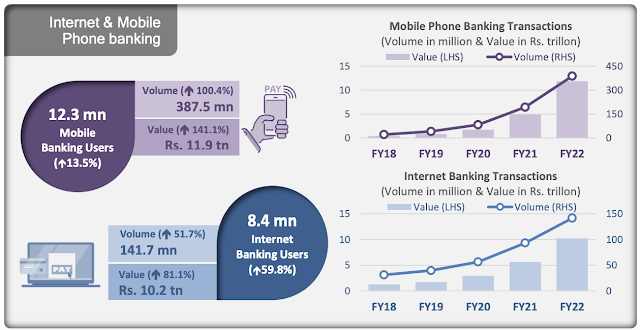
Payments are the clearest example. Pakistan has spent the past several years building the foundations for a more digital payments economy. The State Bank of Pakistan’s Raast Instant Payment System has become one of the country’s flagship financial infrastructure initiatives, designed to enable low-cost, real-time digital payments between individuals, businesses and government entities. The creation of Raast Payments Pakistan Pvt. Ltd. further signals the central bank’s ambition to institutionalise and expand the country’s digital payments infrastructure.
This infrastructure matters because payments sit at the heart of formalisation.
When salaries, merchant transactions, remittances, utility bills and government payments move digitally, they create records. Those records can support credit scoring, taxation, consumer protection and better financial planning. In a country where cash and informality remain deeply embedded, digital payments can gradually change the structure of economic participation.
By Business Desk | Published Jul 26, 2026 | 8:06 pm
https://propakistani.pk/2026/07/26/pakistan-sees-sudden-6x-jump-in-credit-card-atm-transactions/
Pakistan’s credit card market recorded its largest-ever quarterly growth, with the number of cards in circulation jumping by 900,000 in just three months, according to Gallup Pakistan’s Digital Analytics Dashboard based on data from the State Bank of Pakistan (SBP).
The total number of credit cards increased from 2.2 million in FY25 to 3.1 million in Q1 FY26 (July-September 2025), up by 44 percent.
The addition exceeds the total net growth recorded over the previous six years, during which the credit card base rose from 1.6 million to 2.2 million.
The surge coincided with a sharp rise in credit card usage. SBP data shows the value of credit card transactions at ATMs increased nearly sixfold during the same quarter.
Despite the unprecedented jump, no major bank, fintech, or financial institution publicly announced a large-scale credit card issuance campaign during the period.
The increase could be linked to a major card issuance, a regulatory reclassification of certain card products, or the launch of new credit-based payment products. SBP hasn’t revealed anything on this so far.
Debit cards continue to dominate Pakistan’s payment landscape, accounting for around 90% of the country’s 61.3 million payment cards, while credit cards represent about 4 percent.
-----------
Credit card growth in Pakistan is experiencing a sudden shift, jumping from a stagnant base of 2.2 million to 3.1 million cards in late 2025, driven by rising fintech adoption and digital banking integrations. Despite this growth, total penetration remains exceptionally low relative to the country's population. [1, 2, 3, 4]
Market Statistics and Recent Surge
Base Expansion: Stagnated around 1.6 million to 2.2 million cards between FY20 and FY25, before a single-quarter jump to 3.1 million in Q1 FY26 (July–September 2025). [1]
Transaction Activity: ATM credit card transaction values spiked nearly 6x during the Q1 FY26 surge, confirming active utilization rather than passive issuance. [1]
Overall Market Share: Debit cards still heavily dominate, making up roughly 90% of Pakistan’s 61.3 million total payment cards. [1]
@Manoj_216
Last year, Q1 2025-26:
Nominal GDP was ₹86 trillion (everyone celebrated)
It was then conveniently revised down to ₹80 trillion (almost a 7% downward revision) (after celebrations were over).
This quarter, Q1 2026-27:
Nominal GDP is ₹88.27 trillion rupees.
This may also get conveniently revised down later after the celebrations are over.
Compare unrevised (₹86 trillion) vs unrevised (₹88.27 trillion), we have grown only by 2.6%
Oops! too much of a number game going on !
https://x.com/manoj_216/status/2094990270337290344?s=46&t=Uy6jyUH6DlEyIPi6Mq6AGQ
Abhishek Anand (Madras Institute of Development Studies), Josh Felman (JH Consulting) and Arvind Subramanian (PIIE)
Working Paper 26-3
March 2026
Photo Credit: REUTERS/Amit Dave
https://www.piie.com/publications/working-papers/2026/indias-20-years-gdp-misestimation-new-evidence
KEY TAKEAWAYS
India’s annual economic growth during the boom years between 2005 and 2011 may have been underestimated by about 1–1½ percentage points on average, and subsequent growth between 2012 and 2023 may have been overestimated by about 1½-2 percentage points.
The first methodological issue leading to the misestimation is that the economy’s formal sector has been used as a proxy for the vast informal sector, even though the latter was disproportionately hit after 2015 by demonetization, the introduction of the goods and services tax, and the COVID-19 pandemic.
The second methodological issue causing misestimation is that the deflators for many sectors have been based on commodity prices, which have moved sharply relative to others.
Body
New evidence suggests that India misestimated its annual economic growth rate during the past two decades. It appears that the Indian economy did not grow at a stable rate over the past two decades, as was earlier estimated, but rather boomed during the early 2000s, then decelerated after the global financial crisis and subsequent domestic shocks. Methodological revisions made in February 2026, following commendable consultations, aimed to address the challenges identified.
Former Finance Secretary Subhash Garg is right to question the 7.8% GDP growth figure. Last year’s first-quarter GDP at current prices was first reported at ₹86 lakh crore. It was later revised down to rupees 80 lakh crore. This year’s figure is rupees 88.27 lakh crore. Compare that with the original rupees 86 lakh crore and nominal growth is only about 2.6%. After inflation, real growth almost disappears.
Imagine a kirana shop. Last year the owner said April-June sales were rupees 86,000. This year they were rupees 88,270 just 2.6% more. Now he says last year’s sales were actually only rupees 80,000. Suddenly this year looks like a 10% jump. The extra growth came from changing last year’s number, not from selling much more. That is what happened with GDP. People feel the difference in weak jobs, slow spending and tight household budgets. The government must explain the rupees 6 lakh crore revision instead of celebrating a number that looks better only on paper. Govt may be right in their perception but even common man feels there is no changing his life or prosperity then what is the point of GDP growth. Even in stock market, investors are big shark , they understand every bit of financial growth, they are good in numbers, so why have market fallen for three consecutive sessions after announcement. However no anchor looked me convincing on understanding of GDP and its calculation so they were also throwing ball from one side to another. @DILIPtheCHERIAN @iamnarendranath @bainjal @rohini_sgh @vijaita @suhasinih @ShereenBhan @suchetadalal @latha_venkatesh @sanjayuvacha @Subhashgarg1960 @NKSingh_MP @MishraPrac @maryashakil
https://x.com/praveshparas/status/2095425807321895313?s=61&t=mgTxrmITUbpo9NntN5677Q
According to weekly report issued by the State Bank of Pakistan (SBP) on Thursday, the total liquid foreign exchange reserves held by the country surged to USD 23.716 billion as of Sep 4, 2026 compared to USD 22.528 billion as of Aug 28, 2026.
During the week under review, SBP’s foreign exchange reserves increased by USD 1.21 billion to USD 18.328 billion jump from USD 17.118 billion a week earlier. “The increase in SBP’s foreign exchange reserves is due to receipt of government of Pakistan commercial loan proceeds,” the report said.
https://www.brecorder.com/news/40438973/forex-reserves-surge-to-usd2372bn
However, net foreign reserves held by commercial banks declined by USD 22.5 million to USD 5.388 billion.
The SBP successfully met its foreign exchange reserves target for FY26, with its reserves surpassing USD 18 billion by the end of June 2026. For December 2026, the SBP has set a target of USD 20.20 billion.