Pakistan Needs to Address Its Significant Data Quality Challenges
Policy-makers need data to formulate good policies. Good data produced by government agencies can be expected to lead to good policies and desirable outcomes. But data collection and statistical analyses require adequate methodologies and resources. Unfortunately, Pakistan's data quality gets a "C" grade by international agencies like the International Monetary Fund (IMF). Clearly the country faces significant data quality challenges. These challenges range from estimation of the size and scope of the informal economy and electricity demand/consumption to education and nutrition. Here are some examples of where the Pakistan Bureau of Statistics (PBS) data differs sharply from what is being reported by non-government groups:

1. Gross Domestic Product:
A large chunk of Pakistan's economy is not documented. The PBS seems to be failing in making even the most rudimentary estimates of it. A 2024 joint study of the International Labor Organization and the Small and Medium Enterprise Development Authority (SMEDA) estimated Pakistan's undocumented economy at $457 billion. While other South Asian nations, particularly Bangladesh and India, do include estimated undocumented GDP figures in their official GDP, Pakistan's official GDP figures do not include such estimates. If the Pakistani government decides to include estimates of the informal economy in its official figures, the country's GDP would jump to $1,059 billion in market exchange terms and over $4,000 billion in PPP terms.
 |
| Pakistan's Total GDP, including Undocumented, Estimated at over $1 Trillion |
2. Electricity Consumption:
Electricity demand and consumption are very important indicators of socioeconomic development in any country. Unfortunately, the PBS is failing to comprehend the scale of solarization and energy consumption in Pakistan. The country is experiencing soaring demand for electricity across all of the sectors of its economy. The new demand is being met by rapidly growing deployment of distributed solar, estimated at 38 GW as of June, 2025. In 2025, 44% of solar deployment was residential, followed by industry (26%), agriculture (21%) and commercial users (9%). The expansion of distributed solar has enhanced electrification across the economy, lifting Pakistan's electrification rate to 21.7% in FY2025 from 17% in FY2023, close to the global average of 22%. This surge to over 200 terawatt-hours of electricity is not reflected in official data, according to a report by Ember Energy titled "The solarization of Pakistan's energy economy".


3. Out of School Children:
The Annual Status of Education Report (ASER) Pakistan 2025 national report, officially released on March 26, 2026, shows that the number of "Out of School Children" (OOSC) aged 6-16 years in Pakistan is now 5 million, not 25 million generally reported. "The findings on access are encouraging. Enrollment levels are high, with 92.2 percent of children aged 6–16 in school and only 7.7 percent out of school", says the ASER Pakistan 2025 report. ASER Pakistan is a citizen-led initiative, primarily led by Idara-e-Taleem-o-Aagahi (ITA) in collaboration with various national and international partners to promote foundational learning. It also works closely with over 10,000 volunteers and numerous local civil society organizations such as the Aga Khan Foundation (AKF), PAL Network (People's Action for Learning), UNESCO and federal and provincial government departments in Pakistan.

4. Pakistan Household Survey:
The HIES 2024-25 household integrated economic survey by Pakistan Bureau of Statistics (PBS) raises more questions than it answers. For example, it shows that Pakistani households are buying lower amounts of basic food ingredients like wheat, meat and eggs in the last four years, implying that people are eating less to cover other expenses, like electricity and gas. But it doesn't explain why the households have reported significantly lower purchases of these items than production reported recently by the PBS. What is the source of this discrepancy? Is the data flawed? Or, is it missing a new trend toward less home cooking? Is the young urbanized population buying more prepared foods? Are they ordering out more often using ubiquitous food delivery services?

Summary:
Clearly, the Pakistan Bureau of Statistics (PBS) faces significant data quality challenges in areas such as the size of the informal economy to electricity consumption, education and nutrition.

To keep up with the demands of modern governance, the PBS needs to carry out substantial reforms aimed at improving transparency, quality, and data credibility. The reliability of national indicators such as GDP, electricity consumption, education and nutrition is critical not only for local policy but also for global perception and investor confidence. It also requires additional funding for new technology, increased expertise in field offices and more enumerators in the field to collect data. The PBS's current annual budget of Rs. 5.1 billion (US$18 million) for a population of over 250 million people is not enough to do justice.
Related Links:
Pakistan's Real Total GDP Exceeds $1 Trillion
Pakistan's Digital Public Infrastructure
Pakistan Projected to Be World's 6th Largest Economy By 2075
Pakistan's Electricity Consumption Up 21% in Just Two Years
Pakistan's New Infrastructure Investments and Trade Routes
ASER Pakistan Reports Substantial Progress in Enrolling Out-of-School Children
Pakistan Household Survey Raises More Questions Than It Answers
Pakistan at 75
Growing Presence of Pakistani Women in Science and Technology
Riaz Haq's Youtube Channel
Pakistan's Digital Public Infrastructure
Pakistan Projected to Be World's 6th Largest Economy By 2075
Pakistan's Electricity Consumption Up 21% in Just Two Years
Pakistan's New Infrastructure Investments and Trade Routes
ASER Pakistan Reports Substantial Progress in Enrolling Out-of-School Children
Pakistan Household Survey Raises More Questions Than It Answers
Pakistan at 75
Growing Presence of Pakistani Women in Science and Technology
Riaz Haq's Youtube Channel


Comments
https://youtu.be/EKJqOh2hqmA?is=nkcpeipDe4CJKrO0
In just two years, the country installed an astonishing 27 GW of distributed solar—roughly equivalent to the capacity of every coal, gas and oil power plant ever built in Pakistan. The result isn't simply more renewable energy. It's the rapid electrification of homes, farms, businesses and industry, powered by some of the cheapest solar panels ever manufactured.
Ember's Dave Jones explains why Pakistan's experience could become the blueprint for dozens of developing countries. We discuss cheap Chinese solar, electrification, batteries, economic development, LNG demand, EVs and why distributed energy may allow the Global South to leapfrog the fossil-fuel model that powered the industrial revolution.
If Pakistan is the first large-scale proof that distributed solar can transform an economy, the implications reach far beyond South Asia.
I think this framing better reflects the interview's central argument: this isn't primarily a climate story—it's an economic development story driven by disruptive technology. That theme comes through repeatedly in the discussion.
Overseas Pakistanis send 8.6% more in FY26 as Gulf nations retain top spot
https://gulfnews.com/world/asia/pakistan/saudi-arabia-uae-drive-pakistan-remittances-to-record-416bn-1.500602356
Dubai: Pakistan received a record $41.6 billion in workers’ remittances during fiscal year 2025-26, with Saudi Arabia and the United Arab Emirates accounting for nearly half of the total inflows, underscoring the Gulf’s continued importance to the country’s economy and external finances.
Data released by the State Bank of Pakistan (SBP) on Thursday showed remittances rose 8.6% year-on-year from $38.3 billion in FY25. Saudi Arabia remained the largest source of inflows, contributing $9.78 billion, followed by the UAE at $8.81 billion, the United Kingdom at $6.33 billion and European Union countries at $5.23 billion.
Monthly remittances stood at $3.5 billion in June, up 2% from the same month last year but 18.3% lower than May’s record $4.25 billion, which analysts attributed to a high base following Eid-related transfers.
Biggest source
In June alone, Saudi Arabia remained the biggest source of remittances, with overseas Pakistanis sending $829.6 million, followed closely by the UAE at $792.2 million. The UK contributed $514.9 million, while remittances from the United States totalled $296.8 million.
Khurram Shehzad, adviser to Pakistan’s prime minister, described the annual inflow as a historic milestone.
“This historic milestone reflects the unwavering confidence of overseas Pakistanis and reinforces Pakistan’s external sector resilience, stronger foreign exchange buffers and improving macroeconomic fundamentals,” he tweeted.
Dr Khaqan Najeeb, former adviser to Pakistan’s Ministry of Finance, said the record remittance inflows continued to provide a crucial cushion for the country’s external sector. “Workers’ remittances remained a key source of external sector resilience in FY2025-26, reaching a record $41.6 billion, up 8.6% over the previous year,” he said.
Strong performace
“While inflows eased to $3.5 billion in June due to seasonal factors, they still grew 2% year-on-year, reflecting the continued support of overseas Pakistanis.” He added that Pakistan must boost exports, productivity and investment to ensure remittances complement a more competitive, investment-led economy.
The strong remittance performance comes as Pakistan’s external sector continues to improve. SBP Governor Jameel Ahmad said the country’s current account was expected to post a slight surplus for FY26, supported by robust remittances and services exports despite higher imports.
For the first 11 months of FY26, Pakistan recorded a current account surplus of $255 million, with final figures for the fiscal year expected to remain in positive territory.
https://www.miragenews.com/world-bank-boosts-pakistans-grid-for-reliable-1707915/#google_vignette
WASHINGTON, July 09, 2026 - The World Bank's Board of Executive Directors today approved US$375.9 million in financing for Pakistan's Grid Stability Enhancement Project, to strengthen its national power transmission network under the Boosting Energy Security through Transmission in Pakistan (BEST-PAK) Multiphase Programmatic Approach (MPA). The Project is the first phase of a 10-year program to help Pakistan modernize its electricity transmission network, reduce power outages, and bring more clean energy to homes, businesses, and industries.
"Pakistan's energy challenges are deeply interconnected with its broader economic stability," said Bolormaa Amgaabazar, World Bank Country Director for Pakistan. "By investing in advanced technologies for more resilient transmission infrastructure, this project will contribute to reducing electricity costs, bring more renewable energy onto the grid, and lay the groundwork for a power sector that works better for households, businesses and industries, as well as overall Pakistan's economy."
Pakistan's electricity network has long struggled with grid instability and transmission bottlenecks that limit the delivery of reliable power and leave clean energy generation underutilized. These constraints affect millions of Pakistanis every day through frequent outages, higher electricity costs, and lost economic opportunities.
The project will install advanced equipment to stabilize the transmission grid and improve the flow of electricity at key substations. This includes Static Synchronous Compensators, or STATCOMs, - at three major 500 kV substations, as well as fixed reactors and capacitor banks across 26 grid substations. These upgrades will help bring 640 MW of currently curtailed wind energy onto the grid, enabling the full use of 1,840 MW of wind capacity in southern Pakistan by moving power to major demand centers. They will also support the integration of approximately 491 MW of planned private sector-led renewable energy projects. Together, these improvements will help Pakistan move toward its national commitment of achieving 60 percent renewable energy in its electricity mix by 2030, in line with the country's Nationally Determined Contribution under the Paris Agreement. Over its lifetime, the project is expected to avoid approximately 832,500 tons of CO₂ emissions each year, or more than 20.8 million tons cumulatively over 25 years.
"A reliable and modern transmission grid is essential for Pakistan's energy future," said Waleed Saleh Alsuraih, Lead Energy Specialist for the World Bank's BEST‑PAK program in Pakistan. "As the first phase of the BEST-PAK program, it unlocks a pathway to large-scale clean energy deployment, stronger energy security, and a modern, commercially oriented transmission sector through targeted infrastructure investments and institutional reforms, creating the conditions for future private capital participation."
The project also advances the Government's ongoing transmission-sector reform agenda, centered on the restructuring of National Transmission & Dispatch Company (NTDC) into specialized successor entities. Drawing on relevant international experience adapted to Pakistan's needs, it supports faster implementation of reforms designed to strengthen governance, accountability, operational performance, and the long-term sustainability of the power sector.
Pakistan is among the countries most exposed to climate-related risks, including river and urban flooding and extreme heat events. The project's design accounts for these realities, by requiring all new installations to meet climate-resilient specifications, including elevated platforms above ground to mitigate flood exposure and equipment designed to operate in temperatures of up to 55°C. These measures will help ensure reliable performance during monsoon seasons and heatwaves.
https://youtu.be/EKJqOh2hqmA?is=nkcpeipDe4CJKrO0
Pakistan has quietly become one of the world's most important energy stories.
In just two years, the country installed an astonishing 27 GW of distributed solar—roughly equivalent to the capacity of every coal, gas and oil power plant ever built in Pakistan. The result isn't simply more renewable energy. It's the rapid electrification of homes, farms, businesses and industry, powered by some of the cheapest solar panels ever manufactured.
Ember's Dave Jones explains why Pakistan's experience could become the blueprint for dozens of developing countries. We discuss cheap Chinese solar, electrification, batteries, economic development, LNG demand, EVs and why distributed energy may allow the Global South to leapfrog the fossil-fuel model that powered the industrial revolution.
If Pakistan is the first large-scale proof that distributed solar can transform an economy, the implications reach far beyond South Asia.
I think this framing better reflects the interview's central argument: this isn't primarily a climate story—it's an economic development story driven by disruptive technology. That theme comes through repeatedly in the discussion.
------------
Refrigerator Sales Surge in Pakistan
Pakistan's refrigerator market accounts for ~56% of the country's major household appliances sector. Market penetration sits around 51-56%, with unit sales expected to surge 20% to 339,000 units in CY26. Industry leaders include Haier, Dawlance, Pak Elektron Limited (PAEL), and Waves.
---------
EV Sales Surge in Pakistan
Electric vehicle adoption in Pakistan is exploding in the two-wheeler sector due to soaring fuel costs and the new Pakistan Accelerated Vehicle Electrification (PAVE) program. Electric-bike registrations surged by 322% year-on-year with cumulative sales reaching 125,511 units by May, capturing over 10% of the monthly two-wheeler market.
------------------
Air conditioner (AC) Sales Surge in Pakistan
Pakistan's air conditioning sector represents a massive market estimated at Rs 190 billion annually. However, in June 2026, the industry experienced a supply glut as delayed summer rains and later heatwaves caused consumer demand to lag behind aggressive manufacturer production targets.
https://www.dawn.com/news/2007197
This improvement was primarily driven by a 6.5pc rebound in Large-Scale Manufacturing (LSM), 8.5pc surge in Small-Scale Manufacturing (SSM), and 6.2pc growth in slaughtering.
The manufacturing and mining sectors are critical to Pakistan’s industrial base and jointly contribute 13.5pc to GDP. Within manufacturing, LSM plays a dominant role, accounting for 67.4pc of the sector and 8.2pc of GDP, followed by SSM and slaughtering, which contribute 2.5pc and 1.4pc to GDP, respectively.
However, the mining and quarrying sector posted a modest growth of 0.4pc in FY26, indicating a gradual recovery in extraction activities.
The survey has highlighted that LSM grew by 6.5pc during July-March 2025-26, indicating a broad-based revival in industrial activity, compared to a 1.9pc contraction in the same period last year, which was primarily a continuation of the contraction that began in FY23 due to import restrictions.
In March alone, LSM expanded by 11.1pc, compared with a contraction of 2.4pc a year ago.
Automobile sector
The survey said that the auto industry showed growth across all sectors during July-March FY26, except for farm tractor sector, where production and sales were down by 8pc and 13pc, respectively. Additionally, wartime conditions have significantly increased costs for local tractor OEMs.
The survey highlighted that the auto sector had seen rising investment and was adopting new technologies, and that the industry was well-positioned to maintain its growth trajectory.
By Richie Santosdiaz
https://thefintechtimes.com/fintech-landscape-of-pakistan-in-2026/
Pakistan’s fintech story cannot be separated from the country’s wider economic challenges. For years, Pakistan has faced recurring balance-of-payments pressures, high inflation, currency volatility, fiscal constraints and the difficult task of expanding formal economic participation across a population of more than 240 million people. These structural pressures have shaped almost every part of the economy, including financial services.
That is why fintech in Pakistan matters. It is not simply about digital wallets, payment apps or startup valuations. It is about whether technology can help make one of South Asia’s largest economies more efficient, more inclusive and more formalised.
“Is Fintech the Key to Economic Revival in Pakistan?”was written by me and it highlighted how fintech could support financial inclusion, digital payments, small and medium enterprise (SME) finance, remittances and broader economic recovery. That argument remains highly relevant today, particularly as Pakistan continues trying to move more economic activity into formal and digital channels.
Pakistan’s economic scale is significant. Pakistan’s gross domestic product (GDP) stood at around $371.6billion in 2024, while GDP per capita was approximately shy of $1,500. The economy is supported by agriculture, textiles, manufacturing, services, remittances, construction, telecommunications and a large informal sector, all according to the World Bank. Karachi remains the country’s financial centre, Lahore is a major commercial and technology hub, and Islamabad serves as the political and regulatory capital.
Yet Pakistan’s biggest fintech opportunity may lie outside its formal banking system. Millions of people remain underbanked or financially excluded. The World Bank’s Global Findex Database continues to highlight the importance of account ownership, digital payments and mobile-enabled finance in expanding financial inclusion globally. In Pakistan, the gap between population size and formal financial usage remains one of the most important development challenges facing the sector.
This is where digital finance can have an outsized impact. A bank branch-based model alone cannot serve Pakistan’s entire population efficiently. Geography, income levels, informality and documentation barriers all limit traditional banking reach. Digital wallets, agent networks, mobile accounts and instant payments therefore offer a more scalable path to inclusion.
Payments are the clearest example. Pakistan has spent the past several years building the foundations for a more digital payments economy. The State Bank of Pakistan’s Raast Instant Payment System has become one of the country’s flagship financial infrastructure initiatives, designed to enable low-cost, real-time digital payments between individuals, businesses and government entities. The creation of Raast Payments Pakistan Pvt. Ltd. further signals the central bank’s ambition to institutionalise and expand the country’s digital payments infrastructure.
This infrastructure matters because payments sit at the heart of formalisation.
When salaries, merchant transactions, remittances, utility bills and government payments move digitally, they create records. Those records can support credit scoring, taxation, consumer protection and better financial planning. In a country where cash and informality remain deeply embedded, digital payments can gradually change the structure of economic participation.
Pakistan’s Rs 328 billion major appliance market is recovering rapidly, led by Air Conditioners (23% share, ~190B) and Refrigerators (56%). Driven by rising temperatures, expanding solar power, and economic stability, PAEL projects 20% growth in CY2026, with sales expected to exceed 105,000 ACs and 339,000 refrigerators.The market is fiercely competitive, dominated by local and international manufacturing giants. Key dynamics and brands include:Market Leaders: Top players like Haier, Dawlance, and Pak Elektron (PAEL) command the majority of the market.Air Conditioners: This is the fastest-growing major appliance segment. Waves Corporation is aggressively expanding back into this category using Completely Knocked Down (CKD) strategies to avoid import bottlenecks.Deep Freezers: Waves retains a ~40% market share, with PAEL holding another 15%.Refrigerator Penetration: Household penetration remains at 51%, leaving substantial long-term growth potential for manufacturers.Solar Integration: The rise in distributed solar generation is driving notable shifts in appliance demand, allowing consumers to efficiently run cooling appliances (fans, ACs) during daylight hours.
bne IntelliNews - Pakistan targets fully digital remittances to accelerate cashless economy
https://www.intellinews.com/pakistan-targets-fully-digital-remittances-to-accelerate-cashless-economy-454983/
Pakistan plans to make all remittances sent by overseas workers fully digital as part of a broader strategy to accelerate the country's transition to a cashless economy, Gulf News reported.
Prime Minister Shehbaz Sharif has directed officials to ensure that all remittance inflows are processed through digital channels, saying the move would improve transparency, efficiency and economic activity.
The directive was issued during a high-level meeting on digital payments, where officials reported that 92% of remittances received over the past fiscal year had already been transferred digitally.
The initiative follows a record year for overseas inflows, with workers' remittances reaching $41.6bn in FY2025-26, making them Pakistan's largest source of external financing and a key contributor to the country's foreign exchange earnings.
The government is now seeking to increase the share of digital remittances to 100%, while encouraging wider adoption of electronic payments across the economy. Sharif also instructed authorities to step up awareness campaigns promoting QR code-based payments and urged banks and financial institutions to accelerate the rollout of digital payment infrastructure.
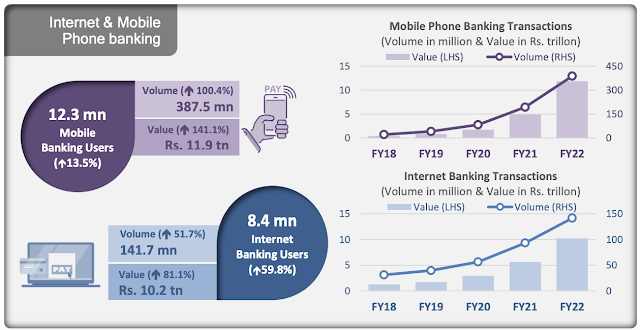
Pakistan has recorded rapid growth in digital financial services over the past year. The number of merchants accepting QR code payments has risen 300% to around 2mn, while mobile banking users have increased from 95mn to 137mn.
Officials said the country processed 11.9bn digital transactions during FY2025-26, reflecting growing adoption of digital payment platforms by businesses and consumers.
The government has also expanded the use of digital payments in public services. Nearly all payments to the National Database and Registration Authority (NADRA) are now made electronically, while all disbursements under the Benazir Income Support Programme (BISP), covering around 10mn beneficiaries, are being transferred through digital wallets.
The latest measures build on Pakistan's wider digital finance strategy. Last month, the government expanded its Roshan Digital Account programme, originally introduced for overseas Pakistanis, to allow foreign nationals and international investors to open accounts.
Authorities have increasingly promoted digital financial systems to improve transparency, reduce reliance on cash and expand financial inclusion. A high-level committee established last year continues to oversee the country's transition to a cashless economy, with an independent review of progress expected later this year.
@Profitpk
Since 2022, Pakistan has built more genuine economic infrastructure than at almost any point in recent history: an instant payments system moving Rs23.3 trillion a quarter, a record $4.6 billion in IT exports, freelancer earnings up 78 percent to $1.76 billion, SME bank financing up 46 percent in a single year, and a Prime Minister personally signing digital trade agreements with Alibaba that are already putting thousands of Pakistani sellers in front of global buyers. Manufacturing clusters from Sialkot to Faisalabad continue to anchor billions of dollars in exports on their own. This is a strong, government built foundation. What follows is not a critique of that record. It is the case for its logical next phase.
With payments, remittances, and digital trade are running at record scale, it is high time to give all seven million of the country's SMEs, factories and freelancers alike, the same rails, and why 2026 is the moment to finish the job. This week’s visual investigation lays out the blueprint:
https://x.com/Profitpk/status/2080198773888721350?s=20
------------
Profit Magazine is Pakistan's leading business and economic publication, frequently covering the country's small and medium enterprises (SMEs), financial markets, and economic growth indicators. [1, 2]
Key Economic and SME Insights
SME Contribution: Pakistan's estimated 5.2 to 7.14 million small and medium enterprises contribute roughly 40% to the national GDP and account for over 30% of exports. [1, 2]
Employment: The SME sector drives close to 80% of all non-agricultural employment in the country. [1, 2]
Financing Updates: State Bank of Pakistan data indicates SME financing reached Rs 853.94 billion, with active borrowers expanding significantly. [1]
Formalization: Programs via the Small and Medium Enterprises Development Authority (SMEDA) target better access to finance and digital registration portals for business growth.
https://profit.pakistantoday.com.pk/2026/07/21/pakistan-already-built-half-the-operating-system
Pakistan Already Built Half the Operating System
Payments, remittances, and digital trade are running at record scale. This is the blueprint for giving all seven million of the country's SMEs, factories and freelancers alike, the same rails, and why 2026 is the moment to finish the job.
By Faizan Siddiqi
@ashoswai
Khajuraho airport has no commercial plane in operation but it is No1 in Customer Satisfaction Index in India. No one believes Modi regime's data and no one should. The fraud has made the country a joke.
https://x.com/ashoswai/status/2082201824535212102?s=61&t=mgTxrmITUbpo9NntN5677Q
——-+++——
‘India’s no. 1’ Khajuraho airport has zero flights: Report
The airport’s terminal building was reportedly completed in the late 1960s, while its maiden flight took off in 1978.
https://www.thestatesman.com/india/indias-no-1-khajuraho-airport-has-zero-flights-report-1503621742.html#google_vignette
The Khajuraho Airport in Madhya Pradesh was recently ranked as the country’s top airport in the latest Customer Satisfaction Index (CSI) of the Airports Authority of India, even though it currently has no commerical flights operating.
According to The Times of India, the report has stirred debate within the aviation sector, prompting questions about the criteria of the AAI survey. It states that the airport currently has no commercial flights operating during July and August.
Further, it highlights that prior to the suspension the airport used to handle only two flights, connecting Delhi and Varanasi. Both the routes have been discontinued now.
The airport’s terminal building was reportedly completed in the late 1960s, while its maiden flight took off in 1978.
“Flights from here usually go to Delhi and Varanasi, but there are none since July 1,” TOI quoted airport director Santosh Singh as saying.
The official added that flights to Delhi and Varanasi are expected to restart in October.
Further, it highlights that prior to the suspension the airport used to handle only two flights, connecting Delhi and Varanasi. Both the routes have been discontinued now.
The airport’s terminal building was reportedly completed in the late 1960s, while its maiden flight took off in 1978.
“Flights from here usually go to Delhi and Varanasi, but there are none since July 1,” TOI quoted airport director Santosh Singh as saying.
The official added that flights to Delhi and Varanasi are expected to restart in October.
Further, it stated that the CSI is compiled from surveys conducted twice a year by independent agencies to ensure the process remains objective. Passengers rate airports on 33 core parameters that cover almost everything from ground transport and parking facilities to Wi-Fi connectivity and food outlets, as well as separate questions on hygiene and cleanliness.
Officials said that these responses are later combined into a composite score out of five.
The Annual Status of Education Report (ASER) Pakistan 2025 report estimates that out-of-school children (OOSC) aged 6–16 stand at roughly 5 million (around 7.7%), with 92.2% enrolled. This contrasts sharply with top-down administrative figures like the Ministry of Education's estimate of 26 million out-of-school children.Key Details from ASER 2025Enrolment Rate: 92.2% for children aged 6–16 across surveyed rural and urban districts.Out-of-School Rate: 7.7% (approx. 5 million children), reflecting a substantial multi-year decline in dropouts among older cohorts, particularly ages 11–16.Scope: Covered 158 districts, surveying over 128,000 households and assessing more than 200,000 children.Context & Methodology DebatesCitizen-Led vs. Administrative Data: ASER relies on household-based, citizen-led surveys, whereas figures near 26 million stem from official top-down administrative databases and the Pakistan Social and Living Standards Measurement (PSLM).Methodological Shifts: Critics note that the 2025 iteration established a new baseline combining expanded rural and urban sampling, making direct comparisons to historical absolute numbers complex.The Learning Crisis: Experts emphasize that while enrolment metrics show positive movement, foundational learning outcomes (reading and arithmetic competencies) continue to face severe regional deficits.
https://www.arabnews.com/node/2654105/pakistan
KARACHI: Foreign companies already operating in Pakistan invested more than $23 billion in the country over the past decade, exceeding cumulative net foreign direct investment of about $21 billion during the same period, the country’s largest foreign investors’ chamber said on Monday.
The comparison underscores a persistent challenge for Pakistan: established multinational companies have continued reinvesting in the country, but Islamabad has struggled to attract substantially larger amounts of new foreign capital.
Pakistan has stabilized after a severe balance-of-payments crisis in 2022-23 pushed it close to default and forced it to seek another bailout from the International Monetary Fund. Under a $7 billion IMF program approved in 2024, foreign exchange reserves have recovered, inflation has eased sharply from its 2023 peak and economic growth has strengthened, though the IMF still projects FDI at only around 0.5 percent of gross domestic product.
“The findings reaffirm the confidence that OICCI members continue to place in Pakistan’s long-term economic potential,” according to a latest report by the Overseas Investors Chamber of Commerce and Industry, or OICCI, which represents more than 200 foreign-invested companies operating across major sectors of the Pakistani economy.
“Our members have consistently reinvested in the country, expanded their operations and continued contributing to national development despite challenging economic conditions. Their cumulative investment of over USD 23 billion during the past decade is a strong vote of confidence in Pakistan’s future.”
OICCI said its members collectively generated Rs13.1 trillion ($47.2 billion) in gross revenue in fiscal 2025, held Rs42 trillion ($151.2 billion) in assets and invested Rs615 billion ($2.2 billion) in capital expenditure. They also paid Rs3.2 trillion ($11.5 billion) in taxes and other government levies, according to the report.
The chamber said its members’ cumulative investment over the decade exceeded Pakistan’s approximately $21 billion in net FDI over the same period. State Bank of Pakistan data define FDI as cross-border investment including equity, intercompany lending, capital equipment and reinvested earnings, net of outflows.
——-
Pakistan - Foreign Direct Investment, Net Inflows (BoP, Current US$) - 2026 Data 2027 Forecast 1970-2024 Historical….$2.7 billion in 2024
https://tradingeconomics.com/pakistan/foreign-direct-investment-net-inflows-bop-us-dollar-wb-data.html
Foreign direct investment, net inflows (BoP, current US$) in Pakistan was reported at 2725600000USD ($2.7 billion) in 2024, according to the World Bank collection of development indicators, compiled from officially recognized sources. Pakistan - Foreign direct investment, net inflows (BoP, current US$) - actual values, historical data, forecasts and projections were sourced from the World Bank on August of 2026.
———-
Foreign direct investment in Pakistan rises 264% MoM to $179 million in July
Power sector draws $57.5 million and financial services $62.3 million; China, Canada top contributors as annual inflows fall 20%
https://profit.pakistantoday.com.pk/2026/08/19/foreign-direct-investment-in-pakistan-rises-264percent-mom-to-dollar179-million-in-july
Foreign direct investment (FDI) in Pakistan rose 264% month-on-month to $179 million in July, the first month of FY2026-27, but remained 20% lower than the inflow recorded in the same month last year, according to data released by the central bank on Tuesday.
The power and financial services sectors attracted the largest foreign investments during the month, while China and Canada were the leading sources of inflows, according to Topline Securities.
The power sector received $57.5 million in FDI in July, compared with $86.8 million in June and $70.8 million in July 2025.
https://www.arabnews.pk/pakistan/foodpanda-to-double-pakistan-operations-in-three-years-eyes-2-billion-economic-activity-2612269
KARACHI: Food and grocery delivery service foodpanda Pakistan plans to double its operations in the country within the next three years, aiming to expand from six million to as many as 12 million households and generate $2 billion in economic activity this fiscal year, CEO Muntaqa Peracha has said.
Foodpanda is a subsidiary of Berlin-based Delivery Hero, which operates in more than 70 countries. The company generated $1.2 billion in economic activity in FY24 and now connects millions of users in 35 Pakistani cities with restaurants, home chefs, and its own pandamart grocery stores. It engages thousands of freelance riders and handles up to 20% of the total food business for its restaurant partners.
“Now that we’re at that point and the economy looks relatively stable we’re hoping to further accelerate that to get to a point of doubling our business over the next, you know, 24 to 36 months,” Peracha told Arab News in a recent interview.
Pakistan, with a population of over 240 million and mobile penetration exceeding 80 percent, has seen rapid expansion in digital commerce. The country’s e-commerce market — projected by Statista to grow at over 8 percent annually for the next five years — is driven by a tech-savvy youth demographic and increasing female participation. The online food delivery segment alone is expected to generate $2.35 billion in revenue by December 2025, while grocery delivery is projected to expand by 19 percent in 2026, according to Statista.
Pakistan’s food and grocery delivery space remains underpenetrated relative to regional peers, presenting opportunities for scale.
——-
Pakistan's restaurant and fast-food sector is expanding at an annual rate of 20%, making food processing the second-largest industry in the country after textiles.Key Growth DriversQuick Service Restaurants (QSRs): Compact QSR formats (300–800 sq. ft.) with tight, focused menus are outperforming traditional casual dining due to lower overhead and high demand. Local disruptors like Cheezious have scaled to over 45 branches by tailoring portions, pricing, and marketing to local tastes.Digital Delivery & Cloud Kitchens: Platforms like Foodpanda operate across dozens of cities, while delivery-only cloud kitchens help operators mitigate high real-estate costs and reduce capital risk.International Expansion: Major brands continue to invest; for instance, Subway Pakistan announced plans to triple its local footprint by opening over 200 new restaurants.Supply Chain & B2B Enablers: Users on LinkedIn share a consensus that supporting the ecosystem—such as supplying raw materials or providing specialized tech and marketing—offers high growth with lower operational risk than opening storefronts directly.
———-
Only 18% Pakistanis Report Ordering Food Online in the Past Week; Usage Higher Among FA+ Educated (46%) and Younger Respondents (22%) — Gallup & Gilani Survey
(Islamabad), 30th April 2026
According to a survey conducted by Gallup & Gilani Pakistan, only 18% of Pakistanis report ordering food at home from Food Panda or another delivery service in the past week, while a large majority (72%) say they did not use such services.
A nationally representative sample of adult Pakistanis from across the country was asked the question: “Please tell us, in the past week, have you engaged in any of the following activities? – Ordered food at home from Food Panda or another delivery service?”. In response, 18% of respondents said they had ordered food online in the past week, while 72% said they had not. The remaining 10% fell into the Don’t Know/No Response (DK/NR) category.
These findings indicate that while food delivery platforms are increasingly visible in Pakistan, their use remains limited, with fewer than one in five Pakistanis reporting recent usage.
https://www.gallup.com.pk/post/39895
https://www.arabnews.com/business/pakistans-economy-grows-beyond-targets-532871
KARACHI: Pakistan recorded five percent growth in the first quarter of the current fiscal year, the central bank said, beating its target and almost doubling the figure for the same period last year.
The State Bank of Pakistan data for the early months of the financial year began in July, 2013 said GDP grew by 5.0 percent, compared with only 2.9 percent in the first quarter of the last fiscal year.
Pakistan has struggled to energize its economy in recent years.
Growth has bumped along well below the level experts say is needed to absorb new entrants to the workforce from Pakistan's growing, youthful population.
"Since the macroeconomic indicators were favorable at the start of the year, the increase in real GDP growth in fiscal year 2014 was discernible," the bank said.
Pakistan's economists had set a growth target for the current financial year of 4.4 percent, and the central bank in earlier reports had forecast growth of four percent.
The upbeat first quarter performance came on the back of good performances by the industrial and services sectors, the report said.
The bank however warned that inflation swelled to 8.1 percent in the first quarter compared with 5.6 percent in the corresponding period last year.
The IMF approved a $6.7 billion bailout loan package for Pakistan in September last year to help the country achieve economic reforms, particularly in its troubled energy sector.
The fund also observed that Pakistan's economy was picking up.